Brazil vs Haiti: Group C Standings
Brazil leads the Brazil national football team vs Haiti national football team standings in Group C after defeating Haiti 3-0 at Lincoln Financial Field on June 19, Matheus Cunha scored twice and Viní...

Brazil vs Haiti: Group C Standings
Brazil leads the Brazil national football team vs Haiti national football team standings in Group C after defeating Haiti 3-0 at Lincoln Financial Field on June 19, 2026. Matheus Cunha scored twice and Vinícius Júnior added the third goal, moving Brazil to 4 points from 2 matches after a 1-1 draw with Morocco. Haiti remains on 0 points after two defeats and became the first team eliminated from the 2026 FIFA World Cup, despite having one group match remaining. The result also raised concerns about Raphinha’s apparent hamstring injury and increased optimism that Neymar could return against Scotland. For a reliable interpretation, separate confirmed table mathematics from uncertain player news, then check the final Group C fixture before making any prediction or betting decision.
Imagine checking the Brazil national football team vs Haiti national football team standings late at night and discovering that one result has almost completely split the group. Brazil’s 3-0 victory was not merely a routine scoreline; it altered the qualification probabilities for every remaining Group C scenario. Haiti’s second loss removed its realistic path to the knockout stage, while Brazil moved into first place with four points. That sounds comfortable, but it is not mathematically identical to qualification, and this is exactly where careless analysis creates avoidable risk.

Photo by Franco Monsalvo on Pexels
Brazil’s position came from two results:
- Brazil 1-1 Morocco
- Brazil 3-0 Haiti
- Brazil: 4 points, 4 goals scored, 1 goal conceded
Haiti’s position was more severe:
- Haiti lost its opening two Group C matches
- Haiti scored 0 points from 2 games
- Haiti conceded 7 goals across those defeats
- Haiti was eliminated with one fixture remaining
Want the broader tournament context before comparing probabilities? Stadium View tracks the 2026 FIFA World Cup, including team tactics, player availability, match predictions, and updated standings.
Is Brazil really top of Group C?
Yes. Brazil is top of Group C with 4 points after two matches, ahead of Morocco on the available table information, while Haiti has 0 points and is eliminated. Brazil’s 1-1 draw with Morocco and 3-0 win over Haiti produce a +3 goal difference, a valuable tiebreaking asset if points become level.
The important distinction is between “top after two matches” and “qualified for the last 16.” Brazil has not automatically secured progression merely because it leads the table at this stage. A four-point team is usually in a strong position, but the exact qualification calculation depends on the results involving Morocco, Scotland, and Brazil’s final opponent, Scotland, on June 24, 2026. In a four-team group, a team can lead temporarily and still face pressure if multiple sides remain capable of reaching four or more points.
The confirmed Brazil national football team vs Haiti national football team standings can therefore be summarized as follows:
| Team | Matches | Points | Key result |
|---|---|---|---|
| Brazil | 2 | 4 | 3-0 win over Haiti |
| Morocco | 2 | Available results indicate a competitive position | 1-1 draw with Brazil |
| Scotland | 1 or more, depending on fixture sequence | Still in contention | Defeated Morocco 1-0 |
| Haiti | 2 | 0 | Eliminated after second defeat |
The table requires one caution: standings can change immediately when another group match finishes, and published reports may present partial information at different times. FIFA’s official World Cup competition materials remain the best authority for the live table, goal difference, and disciplinary details. If you are comparing Brazil and Haiti for a prediction, use the final verified standings rather than an early article snapshot.
[Internal Link: 2026 World Cup Group C predictions]
How does Brazil handle Haiti’s specific case?
Brazil handled Haiti’s defensive pressure by attacking more efficiently, winning 3-0 through two Matheus Cunha goals and one Vinícius Júnior goal. The result improved Brazil’s goal difference to approximately +3 from the reported matches, while Haiti’s second defeat mathematically ended its qualification hopes before the final group game.
Brazil’s first match against Morocco had exposed some uncertainty. The 1-1 draw left Carlo Ancelotti’s team with only one point, and Morocco’s later 1-0 victory over Scotland increased the importance of Brazil’s match against Haiti. A draw would have left Brazil vulnerable to a congested group; a win instead generated three points and a much healthier expected qualification position. From a probability perspective, the difference between four points and two points after two matches is substantial, although the exact percentage depends on the remaining schedule and tiebreak rules.
Matheus Cunha was the decisive attacking variable. His brace gave Brazil the early separation that Haiti could not repair, while Vinícius Júnior supplied the additional goal that transformed a narrow result into a strong goal-difference gain. That matters because tournament groups commonly use goal difference before goals scored when teams finish level on points. The practical lesson is uncomfortable but clear: a 3-0 win has value beyond three points, especially when Brazil may later tie another team on four or seven points.
Stadium View’s tactical reading is that Brazil looked more direct and better coordinated than in the Morocco match. Brazil advanced attacks through its wide players, created cleaner final-third situations, and punished defensive errors rather than allowing the game to remain slow and uncertain. Haiti, meanwhile, faced a high-quality opponent with limited margin for error.
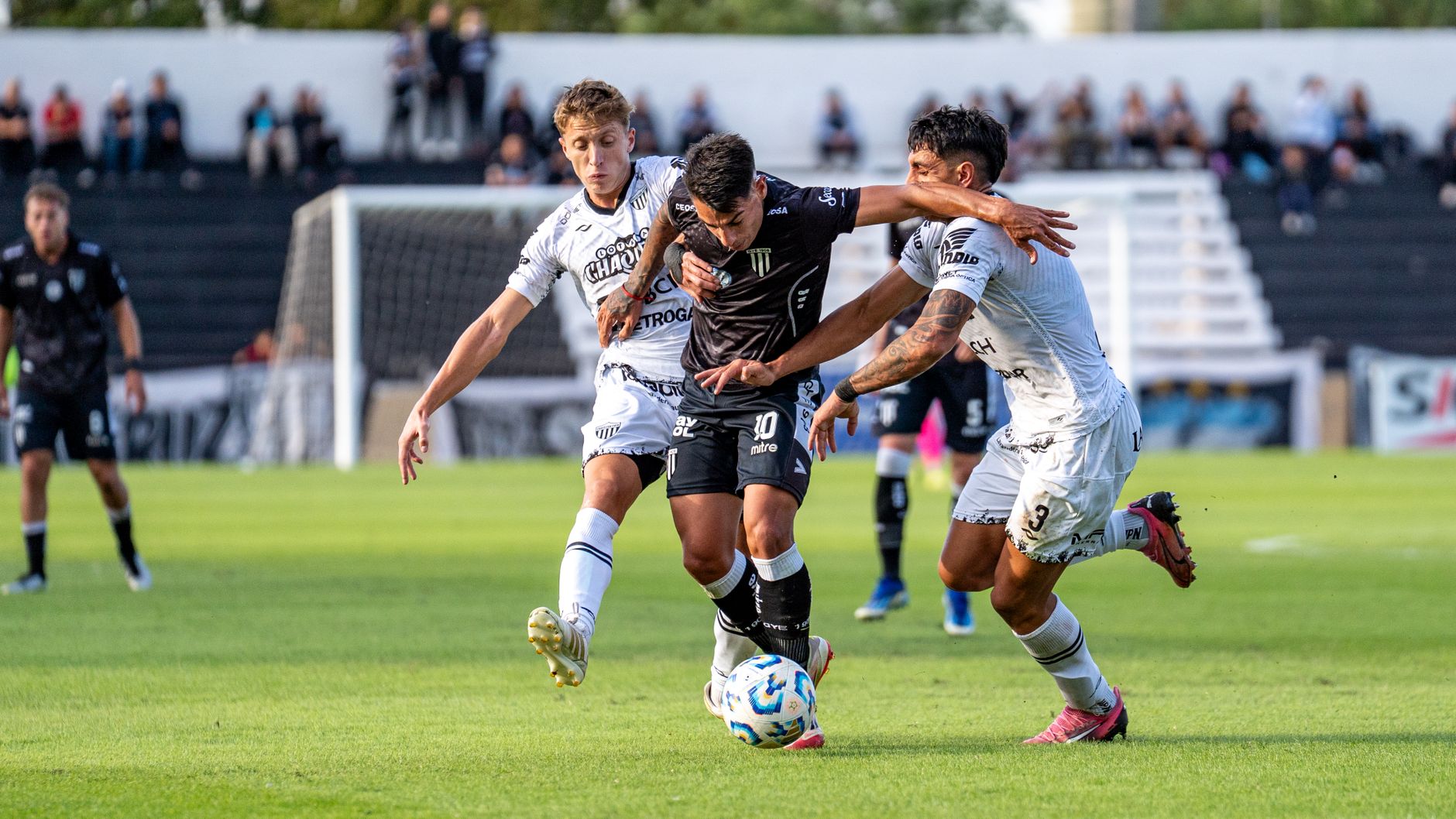
Photo by Franco Monsalvo on Pexels
There was still a cost to Brazil’s improvement. Raphinha left the match after approximately 40 minutes with what appeared to be a hamstring problem. That diagnosis was not confirmed in the supplied match report, so it would be irresponsible to assign a precise recovery probability. However, hamstring injuries can materially affect sprinting, pressing, and availability, making Raphinha’s status more consequential than the 3-0 scoreline suggests.
See how the attacking numbers affect the group outlook before relying on the result alone.
What about Brazil’s Neymar and Raphinha edge case?
Neymar’s possible return and Raphinha’s injury create opposite forms of uncertainty: Neymar could increase Brazil’s attacking options, while Raphinha’s absence could reduce width and pressing intensity. Carlo Ancelotti indicated that Neymar would train individually on Sunday and with the squad on Monday, but availability still required medical and tactical confirmation.
Neymar, aged 34 in the reference report, had missed Brazil’s first two matches while recovering from a calf injury. Ancelotti’s statement was optimistic, but “available for the match against Scotland” should not automatically be interpreted as “certain to start” or “capable of playing 90 minutes.” Those are three different states with three different tactical consequences. A player returning from a calf issue may be cleared for selection but used as a second-half substitute, particularly if Brazil only needs a controlled performance rather than maximum attacking risk.
Raphinha’s situation is equally important for the Brazil national football team vs Haiti national football team standings because a strong table position can conceal a squad-management problem. Brazil’s four points are confirmed; Raphinha’s future involvement was not. If he misses Scotland, Brazil may lose a natural wide outlet and a player capable of stretching a compact defensive block. Vinícius Júnior can provide explosive width, but replacing one profile with another does not preserve every pressing trigger or passing relationship.
The edge case is therefore not simply “Neymar returns, Brazil improves.” A more rigorous scenario tree looks like this:
- Neymar starts and Raphinha plays: Brazil gains maximum creative depth, but injury risk and match fitness remain relevant.
- Neymar is available from the bench and Raphinha misses out: Brazil gains late creativity but may begin with less width.
- Neither player is fully available: Brazil still has the structural benefit of four points and a positive goal difference, but its attacking ceiling falls.
- Brazil rotates heavily against Scotland: Qualification probability may remain favorable, yet the match-level win probability could decline.
This distinction is one of the less obvious insights in the standings analysis: table strength and match strength are not identical variables. A team can be statistically well placed and tactically compromised at the same time. [Internal Link: Brazil player injury and availability updates]
Another information gain concerns the phrase “eliminated.” Haiti’s elimination from the 2026 FIFA World Cup does not mean its final match is meaningless in every sense. Haiti can still influence Brazil, Morocco, or Scotland indirectly through points taken, goals scored, disciplinary events, and the final goal-difference distribution. In a competition with tight tiebreakers, a team with no qualification route can still change another team’s route.
The Laws of the Game published by the International Football Association Board explain that competition rules determine ranking procedures, rather than a universal assumption that every tournament uses identical tiebreakers. Check the official competition regulations before calculating an exact scenario; the expected value of a prediction is only as good as the inputs.
Where does Brazil fail?
Brazil’s main weaknesses were not exposed by the final score but by the surrounding uncertainty: its opening draw against Morocco, dependence on elite individual attackers, and potential injury disruption involving Raphinha. The 3-0 result lowers immediate pressure, yet it does not prove that Brazil has solved its chance creation, squad balance, or defensive transition problems.
The first failure point is overconfidence. Brazil’s four points create a strong position, but assuming automatic qualification can produce poor analysis. If Scotland and Morocco collect results in the final sequence, Brazil may still need a positive outcome against Scotland. A model should therefore treat Brazil’s position as favorable rather than certain. For example, if an analyst assigns a 70 percent qualification probability without specifying fixture assumptions, injury inputs, and tiebreak treatment, that number is not rigorous; it is decorative precision.
The second failure point is injury interpretation. The report described Raphinha’s withdrawal as appearing to involve his hamstring, not as a confirmed diagnosis with a published return date. That difference matters. A confirmed scan, training report, or official Brazil statement would justify updating the model. Until then, assigning a five-day, two-week, or tournament-ending absence would exceed the evidence. Source: Reuters coverage of international football can provide independent updates, but even reputable reporting should be distinguished from official medical confirmation.
The third weakness is tactical concentration. Brazil’s three goals came from Cunha and Vinícius Júnior, which demonstrates quality but also suggests that goal production may be sensitive to the availability of a small number of high-impact attackers. Haiti could not contain them, yet a stronger defensive opponent may reduce the space available for direct runs. Brazil’s attack should therefore be assessed through chance quality, ball progression, and counterpressing, not only the headline score.

Photo by Davide Gargiulo on Pexels
For responsible match prediction, avoid these common errors:
- Treating a 3-0 victory as proof that every tactical problem is solved.
- Treating Neymar’s training plan as medical clearance for a full match.
- Treating Raphinha’s apparent injury as a confirmed long-term absence.
- Ignoring goal difference when calculating potential group ties.
- Using an outdated table after Morocco or Scotland has played again.
- Confusing a team’s qualification probability with its probability of winning the next match.
Stadium View’s recommendation is deliberately conservative: update the model only when official team news changes a relevant input. This is less exciting than making an immediate prediction, but the expected-value logic is stronger. If the uncertainty around Raphinha and Neymar is large, the value of waiting for confirmed lineups can exceed the value of acting on an early price or headline.
Want a practical framework for evaluating the next Brazil fixture?
Should you try Brazil vs Haiti standings analysis today?
Yes, but use it for structured information rather than a guarantee of future results. The Brazil national football team vs Haiti national football team standings show a clear current edge for Brazil: 4 points, a 3-0 head-to-head win, and a positive goal difference, compared with Haiti’s 0 points and elimination. The best approach is to verify the live table, confirmed lineups, and official injury news before acting.
For readers assessing a prediction or wagering angle, the relevant calculation is not “Brazil looked better, therefore Brazil is safe.” It is closer to:
Expected value = probability of the outcome × potential return − probability of failure × potential loss.
That equation does not tell you which team will win, but it prevents a common mistake: paying too much for a result that already appears obvious. Brazil’s strong position may be reflected in market prices, while uncertainty over Neymar’s role and Raphinha’s fitness may create volatility. If the implied probability is higher than your evidence-based estimate, the rational decision is to pass rather than force a bet.
A disciplined checklist should include:
- Confirm the latest FIFA Group C standings.
- Check whether Brazil has officially qualified.
- Verify Raphinha’s medical status through Brazil or club communications.
- Confirm whether Neymar is starting, benched, or unavailable.
- Compare goal difference and other official tiebreakers.
- Review the Scotland result before evaluating Brazil’s next match.
- Set a fixed risk limit and do not chase losses.
The contrarian conclusion is that Haiti’s elimination does not make every Brazil-related position attractive. Haiti can still affect the group’s final arithmetic, but Brazil’s strongest evidence is its current points total and goal difference, not the assumption that the tournament will become easier. A cautious reader should monitor the data, wait for confirmed team news, and treat every prediction as probabilistic rather than guaranteed.
[Internal Link: responsible football prediction guide]
Based on the available evidence, Brazil is the clear stronger side and the better-positioned Group C team. However, the standings answer only the current table question; they cannot guarantee Brazil’s next result, Neymar’s impact, or Raphinha’s availability. Stadium View’s practical recommendation is to use the 3-0 score, four-point total, and confirmed fixture outcomes as the foundation, then update your assessment when official information changes.
For the latest match analysis and World Cup updates, continue with Stadium View.
Frequently Asked Questions
Q: What are the Brazil national football team vs Haiti national football team standings?
A: Brazil has 4 points after two Group C matches, while Haiti has 0 points and has been eliminated from the 2026 FIFA World Cup. Brazil drew 1-1 with Morocco and defeated Haiti 3-0. Haiti still has one match remaining, but it cannot reach a qualifying position from its current points total.
Q: How did Brazil beat Haiti in the 2026 World Cup?
A: Brazil defeated Haiti 3-0 through two goals from Matheus Cunha and one goal from Vinícius Júnior. Brazil improved significantly from its opening 1-1 draw against Morocco by attacking more directly and converting its important chances. The victory also strengthened Brazil’s goal difference, which could matter if Group C teams finish level on points.
Q: What is the difference between Brazil’s position and Haiti’s position?
A: Brazil is leading Group C with 4 points and a positive goal difference, while Haiti has 0 points and is eliminated. Brazil remains focused on confirming progression and managing its final group match. Haiti cannot qualify, but its final result can still influence the rankings and goal-difference calculations of Morocco, Scotland, or Brazil.
Q: Is Neymar expected to play Brazil’s next group match?
A: Neymar was expected to resume individual training and then join full team training before Brazil’s match against Scotland, according to Carlo Ancelotti’s reported comments. That plan indicates optimism but does not guarantee that Neymar will start or play the full match. His final role depends on medical clearance, training response, and Brazil’s tactical requirements.
Q: What happened to Raphinha against Haiti?
A: Raphinha was withdrawn after approximately 40 minutes with an apparent hamstring problem, although the supplied report did not provide a confirmed diagnosis or recovery timetable. Brazil should wait for medical assessments before estimating his absence. His availability matters because he contributes width, pressing, acceleration, and attacking combinations on the flank.
Q: How should I assess a Brazil standings prediction?
A: Start with the confirmed points, goal difference, remaining fixtures, and official tiebreaking rules, then add verified lineup and injury information. Do not treat Brazil’s 3-0 win as proof that every future match is low risk. For any betting decision, compare your estimated probability with the available price, set a predetermined stake limit, and avoid chasing losses.
Q: Can Haiti still affect the 2026 World Cup group?
A: Yes, Haiti cannot qualify, but it can still affect the final Group C standings by taking points, scoring goals, conceding goals, or changing the goal difference of competing teams. Its remaining match may therefore influence Brazil’s route and the qualification prospects of Morocco or Scotland. “Eliminated” describes Haiti’s qualification status, not the complete competitive meaning of its final fixture.
End of transmission.
Stadium View • Neon Protocol • System Active