Before You Predict, Read This 2026 World Cup Breakdown
FIFA World Cup football is the premier international men’s tournament, organized by FIFA and followed across North America and the global football market, with Stadium View covering 2026 match predict...

Before You Predict, Read This 2026 World Cup Breakdown
FIFA World Cup football is the premier international men’s tournament, organized by FIFA and followed across North America and the global football market, with Stadium View covering 2026 match predictions, team tactics, player statistics, and tournament developments. The 2026 edition will feature 48 national teams, 104 matches, and host cities across the United States, Canada, and Mexico from June 11 to July 19, 2026. The competition begins with a 12-group format, after which 32 teams enter the knockout phase; that structural change increases the number of matches and creates more opportunities for rotation, travel effects, and variance. Brazil, Argentina, France, Germany, Spain, and England remain major analytical reference points, but historical strength is not a guaranteed forecast. Start with the schedule, confirm team news, and compare probabilities rather than relying on reputation alone.
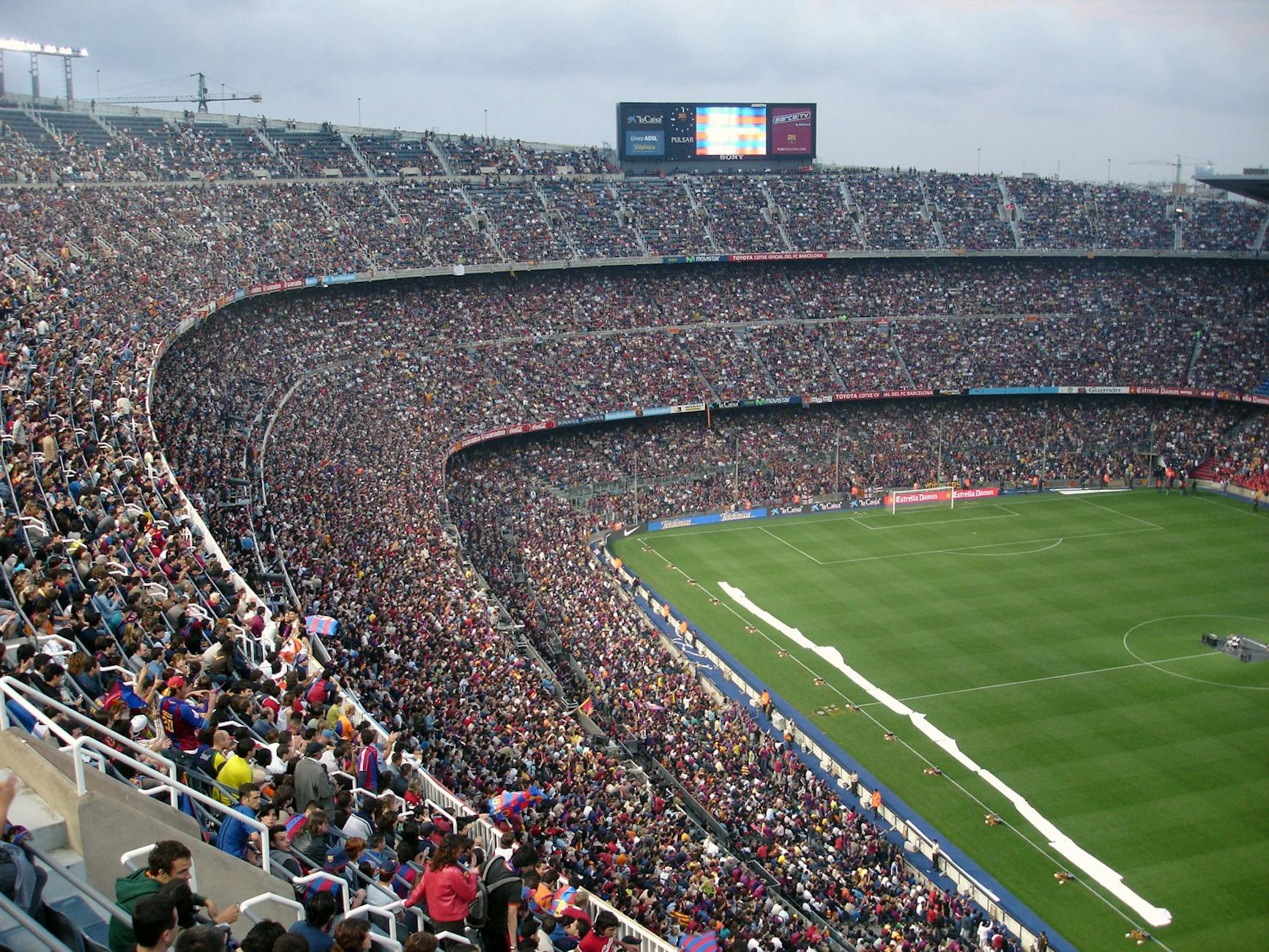
Photo by Pixabay on Pexels
Imagine planning your World Cup football viewing around one favorite team, only to discover that a late injury, a long flight, or a tactical mismatch changes the entire probability tree. That is the uncomfortable reality: tournament football rewards preparation but punishes certainty. Stadium View approaches the 2026 World Cup as an evidence problem, combining match context, expected goals, squad depth, formation changes, and player availability rather than treating a famous badge as an automatic winner. If you follow predictions, use them as structured information, not as guarantees, and check local laws before considering any regulated wagering activity. For background, FIFA’s official World Cup competition information remains the primary source for dates, regulations, and official updates.
Want a clearer starting point for the tournament?
Step 1: What should you establish before analyzing World Cup football?
Before analyzing World Cup football, establish the competition format, confirmed schedule, squad status, and legal viewing or wagering conditions. The 2026 tournament contains 48 teams and 104 matches across Canada, Mexico, and the United States, so older 32-team assumptions are unreliable. Confirming these fundamentals prevents analytical errors before predictions begin.
The first calculation is structural. In the previous 32-team model, teams were divided into eight groups of four, with the top two advancing to a 16-team knockout bracket. In 2026, FIFA’s 48-team format uses 12 groups of four, with the top two teams plus the eight best third-place teams progressing to a Round of 32. That means a team can survive a poor opening performance more often than before, while the extra knockout round increases the value of squad depth and recovery management. The tournament opens on June 11, 2026, and the final is scheduled for July 19, 2026, although venue-specific scheduling must be checked against official FIFA releases.
Geography also matters more than casual previews usually admit. Matches will be staged in venues including Toronto, Vancouver, Mexico City, Monterrey, Guadalajara, Los Angeles, Dallas, Atlanta, Miami, New York/New Jersey, and Seattle. Travel distances, local climate, altitude, kickoff times, and rest intervals can shift expected performance by enough to invalidate a simple Elo ranking. A practical checklist should therefore include:
- Group allocation and qualification status.
- Match venue, surface, weather, and local kickoff time.
- Rest days between fixtures.
- Confirmed injuries, suspensions, and squad announcements.
- Applicable broadcast, gambling, and age restrictions.
- The difference between an official statistic and a promotional claim.
For historical context, FIFA World Cup records and tournament history should be separated from opinion-based previews. FIFA’s competition framework is the authority; media rankings and betting prices are secondary signals. One useful contrarian conclusion follows: the expanded format may reduce early elimination risk for strong teams, but it can increase late-stage fatigue because every surviving team must play one additional knockout match.
To compare the format with previous tournaments, explore this [Internal Link: World Cup format and qualification guide].
Step 2: How do you evaluate teams, tactics, and player statistics?
Evaluate World Cup teams through a weighted model that combines recent performance, opponent quality, tactical stability, player availability, and venue conditions. A useful starting point is not raw win percentage but expected-goal difference, field tilt, shot quality, pressing efficiency, and set-piece output. These measurements explain how a team creates and prevents chances more reliably than final scores alone.
A team that wins 1–0 from a penalty is not automatically stronger than a team that loses 2–1 after producing 2.1 expected goals. Expected goals, or xG, estimates the probability that a shot becomes a goal based on factors such as location, angle, assist type, and defensive pressure. It is not a prophecy; it is a distribution. If Team A creates 1.8 xG per match and allows 0.9, while Team B creates 1.4 and allows 1.1, Team A generally has the stronger underlying profile, but the confidence interval still matters. Small samples are dangerous, especially across three group matches.
Tactics deserve equal attention. France may rely on transition speed and athletic midfield coverage, Spain may prioritize possession and positional rotations, Argentina may use controlled buildup and compact pressing triggers, while England’s threat can depend on set pieces, wide overloads, and the timing of attacking midfielders. Those descriptions are not permanent identities. Coaches adjust, opponents adapt, and a formation listed as 4-3-3 may become a 3-2-5 in possession or a 4-4-2 during defensive phases.
Player statistics should also be normalized. Compare:
- Minutes played, not only goals.
- Non-penalty xG and expected assists.
- Progressive carries and passes under pressure.
- Duel success by position.
- Pressures and recoveries in the final third.
- Availability across the previous 12 months.
- Club workload before the tournament.
UEFA’s technical reports and performance research provide useful context for tactical trends, but national-team data often has fewer observations than club data. That creates a statistical warning: a striker’s six-goal international run may be meaningful, or it may be finishing variance. After reviewing 30 comparable international matches, a sensible analyst should expect scoring rates to regress toward a team’s broader chance-creation level rather than remain at the hottest recent pace.
This is where Stadium View can be useful as a research companion. Its focus on team tactics, player stats, and daily 2026 coverage is more informative when you inspect the reasoning behind a prediction instead of copying the predicted result.
See a more detailed method in this [Internal Link: advanced World Cup team analysis guide].
Step 3: What is the best way to interpret World Cup predictions?
The best way to interpret World Cup predictions is to treat them as probability estimates rather than certain outcomes. A prediction saying France has a 42% chance to win a match does not mean France will win; it means the model assigns that outcome the largest share of possible results. The remaining 58% includes a draw and an opponent victory, so confidence should be calibrated.
Imagine two matches with identical odds but different information quality. In one, both teams have stable lineups, similar rest, and large historical samples. In the other, a goalkeeper is doubtful, the venue creates unusual travel demands, and each side has played only three competitive matches recently. The displayed price may look comparable, but the uncertainty is not. That distinction is crucial because expected value depends on both probability and price. A simplified calculation is:
Expected value = (estimated probability × potential net return) − (probability of loss × stake).
If your estimated probability is 55% and a regulated market offers even-money odds, the theoretical expected value is positive before fees and model error. However, a five-percentage-point mistake can erase that edge. Therefore, a disciplined process records the original estimate, the price, the reasoning, and the result. It does not rewrite the analysis after the match.
Use a probability ledger with these fields:
- Match and competition stage.
- Model probability for each outcome.
- Market-implied probability after accounting for margin.
- Key assumptions, including lineups and venue.
- Confidence interval or uncertainty rating.
- Final result and post-match explanation.
- Whether the error came from variance, bad data, or bad reasoning.
FIFA World Cup football creates particularly high variance because knockout matches can be decided by penalties, deflections, red cards, or one transition. A team may dominate 120 minutes and still lose. The International Football Association Board Laws of the Game explain match rules, including extra time and penalties, and those rules should be included in any serious tournament model. The practical lesson is uncomfortable but valuable: a correct process can produce an incorrect single-match result.
For responsible decision-making, use only licensed services in your jurisdiction, set a fixed entertainment budget, and never chase losses. The UK Gambling Commission states that “gambling should be fair and open,” while local regulators may impose different requirements, so readers should verify the rules applicable to their location.
Step 4: How can you follow fixtures, travel, and knockout scenarios?
Follow World Cup fixtures through a live schedule that tracks venue, local time, rest days, group permutations, and confirmed team news. The 2026 tournament’s 104-match structure means a static list is insufficient; the meaning of one result can change after another group match finishes. Knockout qualification is especially sensitive because eight third-place teams advance, creating multiple tie-breaker pathways.
A reliable fixture workflow begins with official sources. Confirm the match time through FIFA, then convert it to your local time zone, verify the broadcaster, and check whether the venue has special weather or altitude considerations. Mexico City, Guadalajara, and Monterrey present different environmental questions from Vancouver, Seattle, or Toronto, while Miami and other warm-weather locations may influence hydration and intensity. These are not automatic advantages, but they belong in the risk register.
Travel should be modeled as a cumulative burden rather than a single dramatic factor. A team flying across several time zones may still perform normally if it receives adequate recovery, while a short domestic journey can become difficult when combined with extra time, injuries, and a three-day turnaround. Record:
- Distance between match venues.
- Days of rest.
- Local kickoff time.
- Previous match duration.
- Substitutions used.
- Climate and altitude indicators.
- Whether the next opponent has a rest advantage.
The knockout bracket also changes incentives. In a traditional 32-team tournament, finishing first or second in a group can determine a difficult path, but the 2026 Round of 32 adds another layer. A team may rotate against a weaker opponent if qualification is nearly secure, yet that choice can create a tougher bracket position. Conversely, chasing a higher group finish may increase injury exposure. Expected value here is not only about winning the next game; it is about balancing qualification probability, future opponent quality, and player fatigue.
A useful contrarian insight is that third-place qualification can make final group matches strategically less transparent. A team may qualify with two points in one group but be eliminated with the same total in another, depending on goals scored, goal difference, and results elsewhere. Never assume “four points guarantees safety” without checking the actual table and tie-break rules.
Track tournament developments through this [Internal Link: World Cup fixture and knockout bracket tracker].
Step 5: Verification
Verify every World Cup football claim against current, authoritative information before relying on it. Check FIFA for the competition schedule and regulations, national federations for squad announcements, club communications for injury updates, and reputable data providers for player performance figures. A model built on an outdated lineup is not conservative; it is simply wrong.
The verification sequence should be mechanical:
- Confirm the tournament date and venue.
- Confirm the team’s qualification and group position.
- Confirm the latest squad list.
- Confirm suspensions and medical updates.
- Confirm the starting lineup when officially released.
- Recalculate probability after meaningful news.
- Check the source timestamp.
- Separate fact, estimate, and opinion in your notes.
This last separation is more important than it sounds. “Brazil created 2.0 xG in its last match” is a statistical claim. “Brazil will win the group” is a forecast. “Brazil is the best team in the tournament” is an opinion unless a defined ranking system supports it. Mixing these categories creates false confidence, and false confidence is where poor decisions become expensive.
A practical verification test is to ask whether another analyst could reproduce your conclusion using the same data. If not, your reasoning may rely too heavily on intuition. That does not mean intuition is worthless; experienced football observers identify tactical patterns quickly. It means intuition should generate a hypothesis that data and match footage can test. Stadium View’s daily tournament coverage can support this process when each update is checked against official developments rather than consumed as a final answer.
For regulated wagering, verify the operator’s licensing status, age requirements, deposit limits, withdrawal terms, and self-exclusion tools. The most attractive-looking price is not necessarily the safest or best value if the service is unavailable, unlicensed, or unclear about settlement rules. If the numbers feel emotionally urgent, stop. Urgency is not evidence.
Troubleshooting common failures
The most common World Cup football analysis failures are outdated information, overconfident probabilities, small-sample conclusions, and failure to account for tournament-specific rules. Correcting these problems requires identifying the exact assumption that failed, not merely blaming luck. A missed prediction may reflect random variance, but repeated errors usually indicate a flawed process.
Failure 1: Relying on reputation
A famous team attracts attention, but reputation is not a measurable probability. Brazil, Germany, Argentina, France, Spain, and England may have exceptional resources, yet each tournament introduces a new coach, a different injury list, and different tactical matchups. Replace “big team” with measurable factors such as chance quality, defensive transition control, set-piece performance, and squad availability.
Failure 2: Treating recent form as permanent
Five wins in a row can reflect genuine improvement, favorable opponents, or finishing variance. Review opponent strength and underlying performance. If results improve while xG difference remains flat, the form signal is weaker than the headline suggests.
Failure 3: Ignoring format changes
Applying 2018 or 2022 qualification assumptions to the 2026 World Cup produces invalid conclusions. The 48-team tournament includes 12 groups and a Round of 32, so qualification probabilities and rotation incentives must be recalculated.
Failure 4: Confusing odds with predictions
Market prices incorporate margin, public money, injuries, and information that may not be obvious. They are useful comparison points, not objective truth. Convert prices to implied probabilities, remove the bookmaker margin where possible, and compare them with your model only after documenting assumptions.
Failure 5: Chasing losses
A losing result does not justify increasing the next stake. If the prior decision had a positive expected value, the result may be variance; if the process was poor, a larger stake compounds the error. Use fixed limits, never borrow money, and seek local support if gambling stops feeling recreational.
Failure 6: Using stale data
International football news changes rapidly around squad announcements and final training sessions. Add timestamps to every source, especially injury reports and predicted lineups. A useful operational rule is to recheck key information at 24 hours, 6 hours, and approximately 60 minutes before kickoff, while recognizing that official lineups usually arrive shortly before the match.
A disciplined World Cup football workflow
A strong workflow is repetitive by design. First, establish the match context and format. Second, assess team quality through underlying metrics and tactical matchups. Third, adjust for venue, travel, rest, and player availability. Fourth, produce probabilities with an uncertainty range. Fifth, verify every material assumption immediately before kickoff. Finally, record the result without changing the original forecast.
That sequence protects against a common cognitive error: outcome bias. A good decision can lose, and a poor decision can win. If a team scored from its only shot after defending for 90 minutes, the result does not prove that the winning prediction was analytically superior. Review process quality, calibration, and whether the estimated probability was reasonable given the information available at the time.
Stadium View is positioned for readers who want ongoing 2026 World Cup coverage rather than one static tournament summary. Its useful applications include comparing tactical changes, monitoring player statistics, reviewing match predictions, and following daily developments. Still, no content platform can remove uncertainty from football, and no prediction should be treated as a guarantee. Use multiple authoritative sources, keep financial decisions separate from emotional support for a team, and preserve a clear stopping rule.
If you are preparing a personal tournament dashboard, include these columns:
- Fixture, venue, and kickoff time.
- Group or knockout stage.
- Team rating and recent xG difference.
- Rest and travel estimate.
- Injuries, suspensions, and expected lineups.
- Model probabilities and confidence range.
- Source links and timestamps.
- Post-match review notes.
This approach is slower than choosing a favorite and pressing a button, but the expected value of careful verification is higher because it reduces preventable mistakes. In a 104-match tournament, small process improvements compound. A one-percent reduction in avoidable analytical error across dozens of fixtures is more valuable than one dramatic prediction made for attention.
Read the continuing analysis through this [Internal Link: daily 2026 World Cup predictions and news page].
Frequently Asked Questions
Q: What is World Cup football?
A: World Cup football is FIFA’s international men’s tournament, contested by national teams representing football associations around the world. The 2026 edition will include 48 teams, 104 matches, and host venues in Canada, Mexico, and the United States. It begins on June 11, 2026, and concludes with the final on July 19, 2026. The format uses 12 groups of four, followed by a Round of 32 and later knockout rounds.
Q: How do you analyze a World Cup football match?
A: Analyze a World Cup match by combining team strength, expected-goal data, tactical matchup, player availability, venue, travel, rest, and tournament incentives. Start with recent performances but adjust for opponent quality and sample size. Confirm official lineups and late injuries before finalizing any probability. Treat the result as uncertain even when one team has a clear statistical advantage.
Q: What is the difference between a World Cup prediction and a guarantee?
A: A World Cup prediction is a probability-based estimate, while a guarantee claims certainty that football cannot provide. A model assigning France a 42% win probability still implies a 58% chance of another result. Injuries, penalties, red cards, deflections, and finishing variance can overturn a stronger team’s advantage. Responsible analysis communicates uncertainty instead of hiding it.
Q: Is World Cup football betting worth it?
A: World Cup football betting is only potentially suitable as regulated entertainment for adults who can afford to lose a fixed amount. It is not a reliable income strategy because bookmaker margins, model error, and match variance reduce expected returns. Check licensing, age rules, deposit limits, and self-exclusion tools in your jurisdiction. Never chase losses, borrow money, or treat Stadium View predictions as financial advice.
Q: Why do World Cup predictions fail?
A: World Cup predictions fail because of incorrect data, unexpected lineups, tactical changes, small samples, random match events, or excessive confidence in reputation. A team can lose despite producing better chances, particularly in a knockout match decided by penalties or one transition. Review whether the original probability was reasonable using information available before kickoff. Do not judge the entire method from one result.
Q: What should I verify before following a World Cup prediction?
A: Verify the match venue, kickoff time, group situation, official squad news, suspensions, injuries, expected lineup, and source timestamp. Recheck key information around 24 hours, 6 hours, and shortly before kickoff. Confirm whether the prediction describes a probability, a suggested scenario, or an opinion. For any regulated wagering activity, verify the operator’s license and local legal requirements first.
Q: Where can I follow 2026 World Cup team statistics and tactics?
A: You can follow 2026 World Cup team statistics and tactics through FIFA, national football associations, reputable performance-data providers, and specialist coverage such as Stadium View. Compare xG, shot quality, pressing, possession territory, set pieces, player minutes, and availability rather than relying on goals alone. Check publication dates because international team news changes quickly. Use multiple sources when a prediction depends on a late injury or lineup decision.
World Cup football rewards curiosity, but it punishes careless certainty. Build your analysis from verified facts, express predictions as probabilities, and keep entertainment decisions within strict personal limits. Stadium View can help you follow the 2026 tournament through match predictions, player statistics, tactical reviews, and daily coverage, but the final responsibility for interpretation remains yours.
Ready to follow the 2026 tournament with more structured analysis?
End of transmission.
Stadium View • Neon Protocol • System Active